

Why Do Dentists Ask About Your Medical History?
When you visit a new dentist, one of the first things you may be asked to complete is a medical history form. For some patients, this can feel unrelated to the appointment. After all, you came in for your teeth, not a full medical exam.
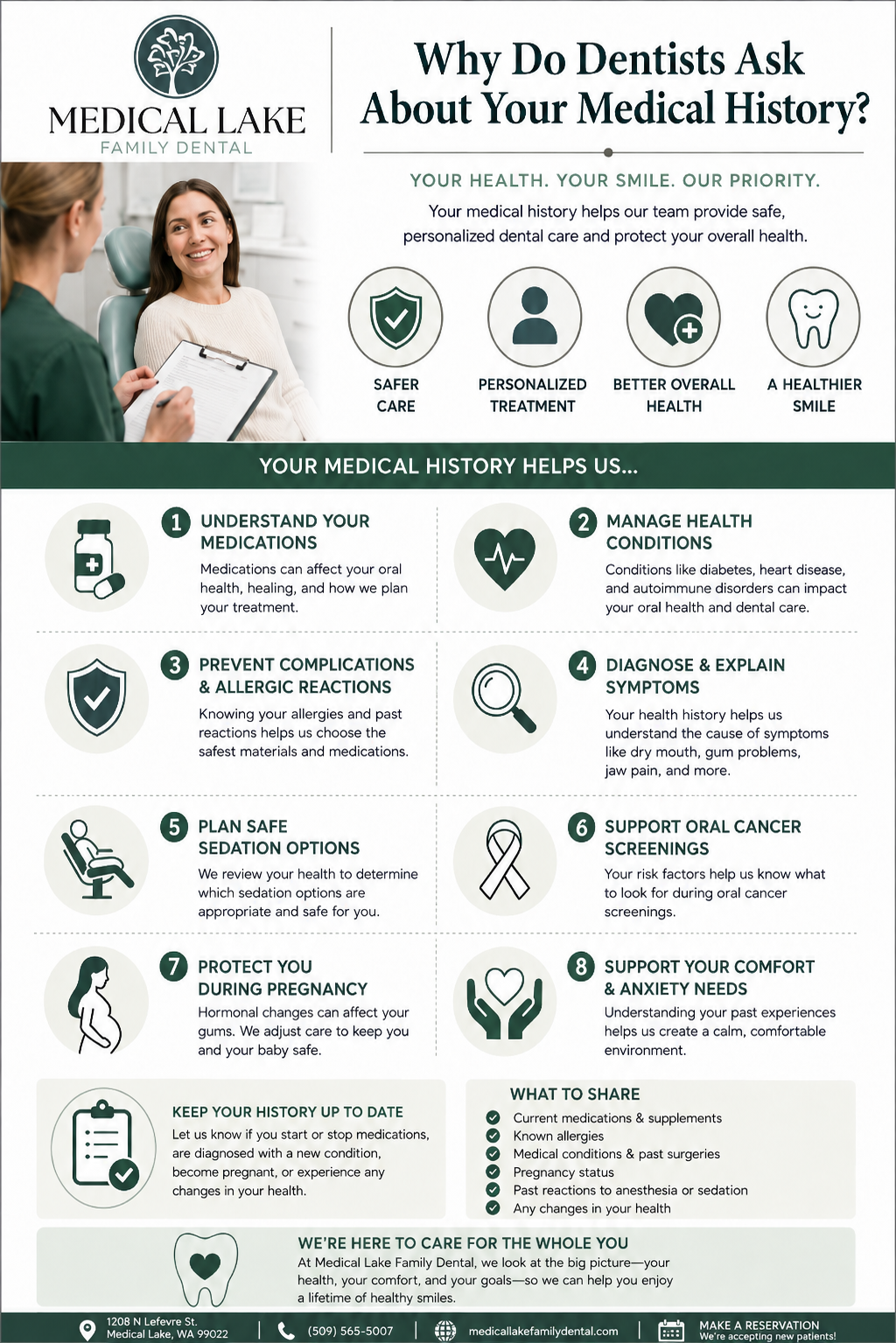
However, your medical history plays an important role in safe, personalized dental care. Your teeth, gums, jaw, medications, medical conditions, and overall health are more connected than many people realize. By understanding your health background, your dentist can better protect your smile, reduce risks, and recommend care that fits your needs.
For patients in Medical Lake, Airway Heights, Cheney, Fairchild Air Force Base, and the surrounding Spokane County area, sharing your medical history helps your dental team provide care that is more informed, comfortable, and complete.
At Medical Lake Family Dental, patient care goes beyond teeth. The team takes time to understand your health, goals, concerns, and comfort level so your dental experience feels personalized from the start.
Why Your Medical History Matters at the Dentist
Your mouth is part of your body, which means your overall health can directly affect your oral health. Certain medical conditions, medications, allergies, and past procedures can influence how your dentist plans treatment, evaluates symptoms, and helps prevent future problems.
A complete medical history helps your dentist understand:
Current medical conditions
Past surgeries or hospitalizations
Medications and supplements
Allergies
Pregnancy
Heart conditions
Diabetes
Blood pressure concerns
History of cancer or radiation treatment
Autoimmune conditions
Anxiety or past dental trauma
Tobacco, alcohol, or substance use
Dry mouth or changes in saliva
Previous reactions to anesthesia or sedation
These details help your dental team make safer recommendations and avoid unnecessary complications.
Your Medications Can Affect Your Dental Care
One of the biggest reasons dentists ask about medical history is to understand what medications you are taking. Prescription medications, over-the-counter medications, supplements, and herbal products can all matter during dental care.
Some medications may contribute to dry mouth, which can increase the risk of cavities, gum irritation, and bad breath. Others may affect bleeding, healing, bone health, or how your body responds to infection.
Your dentist may also need to know about medications before recommending extractions, oral surgery, sedation, or certain types of restorative treatment.
Even if a medication does not seem related to your teeth, it is still worth sharing. Your dental team can determine what is relevant and how it may affect your care.
Health Conditions Can Influence Your Oral Health
Certain health conditions can increase your risk for dental problems or change the way your dental care should be approached.
For example, diabetes can make gum health more difficult to manage and may affect healing. Acid reflux can contribute to enamel erosion. Autoimmune conditions may increase dry mouth or soft tissue irritation. Heart conditions may require additional attention before certain procedures. Cancer treatments, radiation, or chemotherapy can also affect the mouth, gums, teeth, and jawbone.
When your dentist understands your health history, they can look for early signs of concern and recommend preventive care that fits your situation.
For ongoing preventive care, Medical Lake Family Dental provides Dental Cleaning and Prevention designed to support long-term oral health.
Allergies Are Important for Safe Dental Treatment
Your dentist should know about any allergies before treatment begins. This may include allergies to medications, latex, metals, adhesives, or past reactions to dental materials.
For example, if you have had a reaction to a medication in the past, your dentist may need to avoid prescribing it. If you have a latex allergy, the team can take precautions with gloves and other materials. If you have had sensitivity to certain dental products, your dentist can consider alternatives.
Sharing allergy information helps your dental team create a safer and more comfortable experience.
Your Medical History Helps Dentists Understand Dental Symptoms
Sometimes symptoms in the mouth are connected to something happening elsewhere in the body. Your dentist may ask about your medical history to better understand the possible cause of tooth sensitivity, gum inflammation, sores, dry mouth, jaw pain, or changes in your bite.
For example, dry mouth may be related to medications, dehydration, autoimmune conditions, or lifestyle factors. Gum inflammation may be connected to oral hygiene, tobacco use, diabetes, hormonal changes, or other health concerns. Jaw pain may be related to stress, clenching, sleep habits, or TMJ concerns.
Without health history, your dentist only has part of the picture. With it, they can make better recommendations and know when something may need to be monitored more closely.
Dentists Ask About Medical History Before Sedation
If you experience dental anxiety or need a longer procedure, sedation may be an option. Before recommending sedation, your dentist needs to understand your medical background, medications, allergies, and any history of breathing issues, heart conditions, or past reactions to sedation.
This information helps determine which options may be appropriate and what precautions should be taken.
Medical Lake Family Dental offers Sedation Dentistry for patients who need extra support feeling calm and comfortable during treatment.
Oral Cancer Screenings Are Part of Whole-Health Dentistry
Dental visits are not only about checking teeth. Dentists also examine the lips, tongue, gums, cheeks, throat, and soft tissues for signs of abnormal changes.
Your medical history can help your dentist understand your risk factors and know what symptoms or changes should be discussed. Tobacco use, alcohol use, HPV, excessive sun exposure, and family history may all be relevant to oral cancer screening.
Medical Lake Family Dental provides Oral Cancer Detection as part of a proactive approach to patient health.
Why Dentists Ask About Pregnancy
Pregnancy can affect oral health in several ways. Hormonal changes may increase gum sensitivity, bleeding, inflammation, and the risk of pregnancy-related gingivitis.
If you are pregnant or may be pregnant, let your dentist know. This helps the dental team make appropriate decisions about X-rays, timing of treatment, medications, and preventive care.
Routine dental care is still important during pregnancy, but your dentist needs accurate information to help keep care safe and personalized.
Why Dentists Ask About Anxiety or Past Dental Experiences
Medical history is not only about physical health. It can also include anxiety, past dental trauma, or concerns that have made dental visits difficult in the past.
If you have had a negative dental experience, feel nervous in the chair, or have avoided care because of fear, your dental team should know. This allows them to slow down, explain each step, offer comfort options, and help you feel more in control.
At Medical Lake Family Dental, new guests are welcomed with a focus on courage, confidence, and freedom. Their New Dental Guests page emphasizes a warm, judgment-free space where patients can feel supported from the first visit.
Why You Should Update Your Medical History Regularly
Your medical history is not something you only share once. It should be updated whenever something changes.
Tell your dental team if you:
Start or stop a medication
Are diagnosed with a new health condition
Have surgery
Become pregnant
Experience a new allergy
Begin cancer treatment
Develop dry mouth
Start using a CPAP machine
Experience changes in blood pressure or blood sugar
Have a new physician or specialist involved in your care
Even small updates may help your dentist make better decisions about your treatment.
What If You Are Not Sure What to Share?
If you are unsure whether something matters, it is best to mention it. Your dentist can decide whether it affects your dental care.
Helpful items to bring or know include:
A current medication list
Names and dosages of supplements
Your physician’s name
Known allergies
Recent surgeries or hospital visits
Major diagnoses
Any dental concerns or symptoms
Past reactions to anesthesia or sedation
Insurance information, if applicable
Being thorough helps your dental team provide the safest and most effective care possible.
Your Medical History Helps Create a Better Treatment Plan
Dental treatment should not be one-size-fits-all. A patient with healthy gums, no medical concerns, and minimal dental work may need a different plan than a patient managing diabetes, dry mouth, dental anxiety, missing teeth, or a history of gum disease.
Your medical history helps your dentist personalize recommendations around:
Cleaning frequency
X-rays
Gum disease prevention
Restorative treatment
Sedation options
Emergency care
Tooth replacement
Cosmetic goals
At-home oral hygiene
This creates a clearer path forward and helps patients feel more confident in their care decisions.
When Your Medical History Matters Most
Your medical history is always helpful, but it becomes especially important before certain procedures or situations.
This may include:
Tooth extractions
Root canals
Dental implants
Sedation appointments
Emergency dental visits
Gum disease treatment
Oral surgery
Denture adjustments
TMJ therapy
Complex restorative care
Treatment for infections or swelling
If you are experiencing dental pain, swelling, a broken tooth, or signs of infection, your health history can help your dentist respond quickly and appropriately. Medical Lake Family Dental offers Emergency Dentistry for patients who need prompt attention.
Choosing a Dentist Who Looks at the Bigger Picture
A good dental visit should feel thoughtful, thorough, and personal. When a dentist asks about your medical history, it is not just paperwork. It is part of understanding who you are, what your body needs, and how to care for your smile safely.
For patients in Medical Lake and nearby communities, choosing a dental team that listens closely can make a meaningful difference. Medical Lake Family Dental focuses on care that supports health, confidence, comfort, and long-term relationships.
If you are preparing for your first appointment, updating your forms, or returning to the dentist after time away, being open about your medical history helps your dental team care for you well.
Schedule Dental Care in Medical Lake, WA
Your medical history helps your dentist provide safer, more personalized dental care. Whether you are due for a routine cleaning, need help with a dental concern, or are looking for a new dentist near Medical Lake, the team at Medical Lake Family Dental is ready to help you take the next step.
To get started, visit the Make a Reservation page and schedule your next dental visit.
Frequently Asked Questions About Dental Medical History
-
Your dentist asks about your medical history because your overall health can affect your teeth, gums, healing, medications, treatment options, and comfort during dental visits. This information helps your dental team provide safer and more personalized care.
-
Yes. You should tell your dentist about all prescription medications, over-the-counter medications, supplements, and herbal products you take. Some medications can affect dry mouth, bleeding, healing, sedation options, and dental treatment planning.
-
You may not need to fill out a full form every time, but you should update your dental team whenever your health changes. New medications, diagnoses, allergies, surgeries, pregnancy, or changes in symptoms can all matter for your dental care.
-
Yes. Conditions such as diabetes, acid reflux, autoimmune disorders, heart conditions, cancer treatments, and dry mouth can affect your teeth, gums, and treatment needs. Your dentist can use this information to better monitor your oral health.
-
Bring your photo ID, insurance information if applicable, a list of current medications, known allergies, and any major health history details. It can also help to write down questions or concerns you want to discuss with your dentist
